As Venice High school welcomes a freshman class of 638 students—bringing its total enrollment to 2,348 students as of September 17—the school has had to ensure that class sizes are manageable and compliant with LAUSD’s 2022-2025 agreement with UTLA.
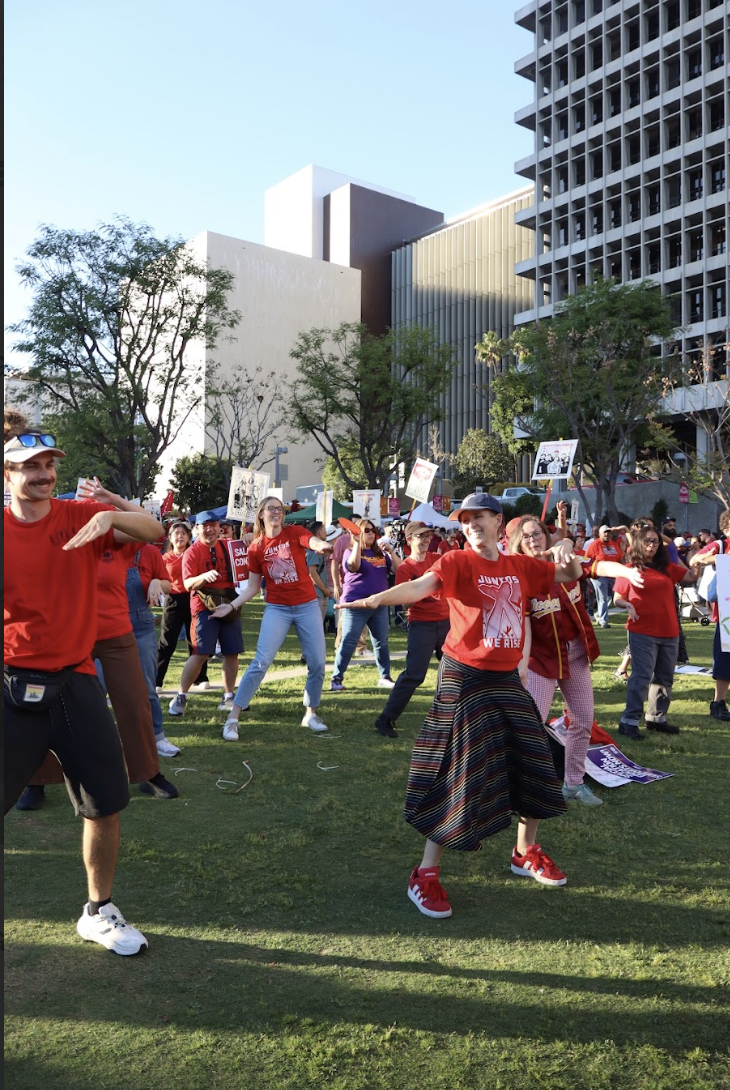
In 2022, Los Angeles Unified School District (LAUSD) and United Teachers Los Angeles (UTLA) agreed upon a contract that would work to gradually lower class sizes in hopes of achieving a better teaching environment and offer more support to students.
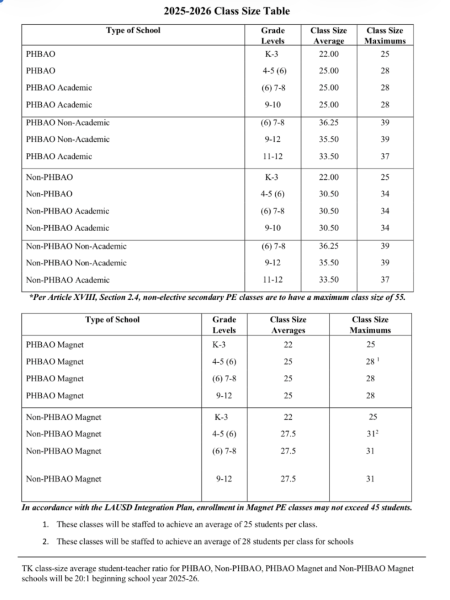
The contract—which would be in effect until the 2025-2026 school year—outlines class size requirements based on various categories: if a class is general or special education; if a class is a core class or an elective; if a class is primarily a 9th-10th grade class or an 11th-12th grade class; and if the school has predominantly Hispanic, Black, Asian, and other Non-Anglo (PHBAO) students.
Based on the UTLA contract, Venice’s 9-10 grade classes must have no more than 28 students, and 11th-12th grade classes must have no more than 37 students.
As the contract approaches its conclusion, some teachers shared that it has brought upon a lot of positive changes while also leaving a lot of room for improvement.
Special education teacher Drake Witham, who also is Venice High’s UTLA chapter chair, said that he has been working with academic counselors and administration to ensure that all classes are meeting the size requirements outlined in the contract. Typically, class sizes decrease after the first few weeks of school due to these efforts.
Decreasing Class Sizes Over the Years
Filmmaking and yearbook teacher Charlotte Medina noted that when she started teaching at Venice three years ago, all of her classes were maxed out at 39 students. This year, she estimates her average class size to be 34 students.
Similarly, biology teacher Julia Bare, who also served as Venice’s UTLA chapter chair from fall of 2023 to spring of 2025, said that her class size maximums were much larger when she first started teaching.
“Having 27 [or] 28 maximum kids in my class feels amazing,” she said. “That feels like a huge win. We definitely notice a difference every year and it makes a huge difference. It’s just that some teachers and students are feeling that difference more than others.”
Disparities and Distributions
Bare said that there is a large disparity between the maximum class sizes for the comprehensive school and magnet schools. The UTLA and LAUSD agreement stipulated that the maximum high school size for a PHBAO academic magnet class must be 28 students. In non-magnet classes, that number can get as high as 37.
Although class sizes have decreased, Bare and Medina still experience an uneven distribution of students among their class periods, which can lead to an inequity in the amount of individual support that they can offer each class.
Medina said that before the interview, she was actually helping two students who were working on a project due that same day.
“If I had a smaller number of students, I would be able to get to as many as possible by the time the bell rings,” said Medina. “I do notice that when I have a class that is a little bit smaller—last year I had a class where I had 24 students in my fourth period—I [am] able to get to and talk to every single one of them within the class period.”
Access to Resources
Medina stresses to her students that she is there to help them, but they also need to be willing to be helped in order to best utilize classroom resources and time, both of which are limited.
Medina said that one of her largest struggles is with not having enough resources for all of her students.
“I deal a lot with technology,” she said. “Right now, I only have 20 computers that are brand new, and out of those 20 computers that are brand new, maybe 17 or 18 are functioning properly, so then I have to think about how to accommodate 30 students.”
Bare said that in terms of resources, she is very lucky to have a large classroom and enough resources for her students.
Witham said that as UTLA representative, he checks in with all the teachers to make sure that they have the resources they need and works to ensure they obtain those resources they lack.
He said his priority is to “make this a place where teachers want to come and teachers want to stay.”
The Impact of Class Size on Student Performance
Smaller classes, although not guaranteed to perform better academically, tend to allow teachers to provide more support and prevent students from getting lost among the crowd.
For Bare, having smaller classes is important for building valuable student-teacher relationships and preventing isolation.
“In larger classes, students tend to feel like they can disappear, and they can feel invisible,” she said. “For some people that might sound like a really good thing, but what it means is that it’s harder for teachers to make connections with students… and so it just means that there are some kids that are going to feel invisible and very lonely.”
Witham echoed a similar statement: “The more one-on-one time you can have, the better outcomes you’re going to have.”
Still, he did say that larger classes can sometimes be beneficial for overall behavior. “We establish pretty early on routines for discipline and I think sometimes in a bigger group, it’s easier to maintain that because students don’t necessarily want to stand out,” he said.
The Unique Challenges of Physical Education and Sports
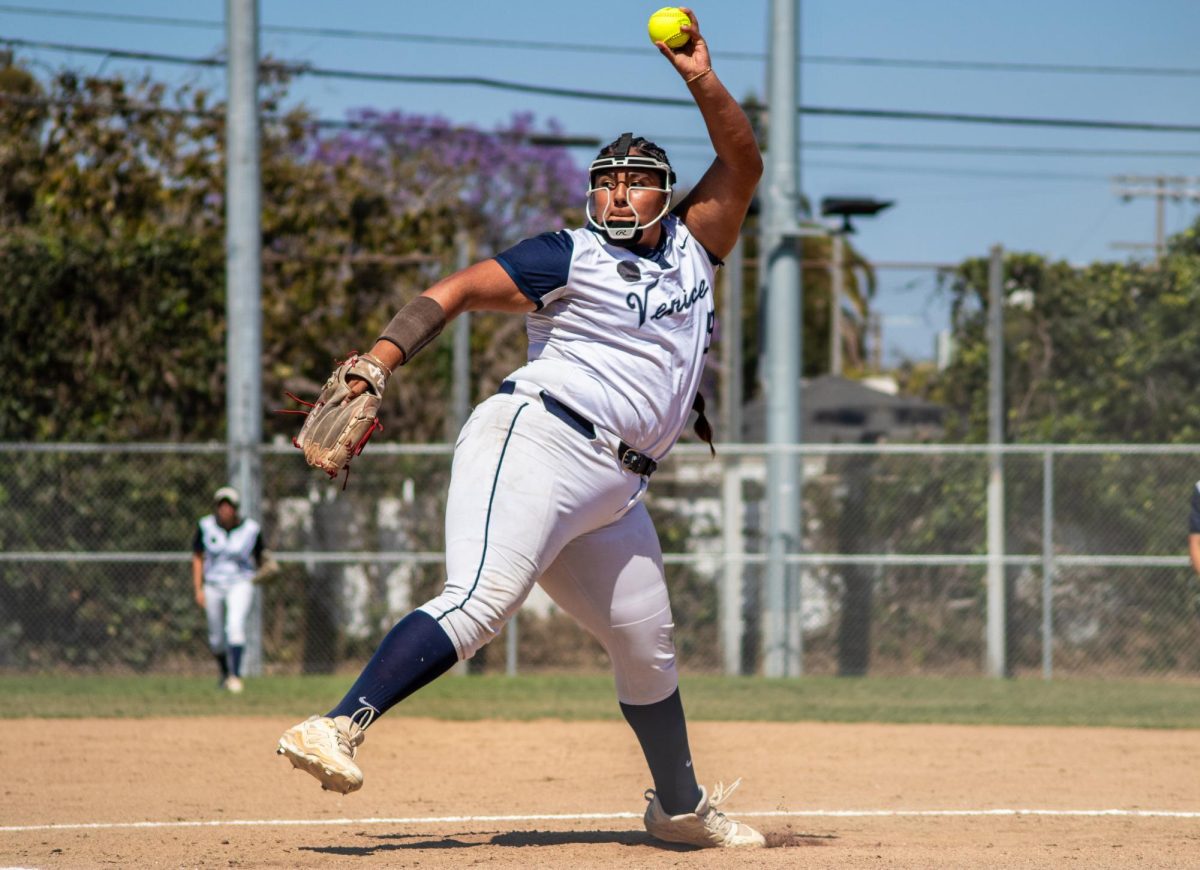
Meanwhile, physical education and sports face different challenges when it comes to handling large classes. According to health and physical education teacher Marc Asselin, Venice has been working to limit P.E. to a single grade per class in order to make classes more manageable.
According to the UTLA and LAUSD agreed class maximum for the 2025-2026 school year, non-elective, non-magnet P.E. classes are to have a maximum of 55 students. Currently, he estimates his P.E. classes to have an average of 48 to 50 students.
“I know that different things over the past few years have been changing in terms of trying to move to an all freshman class and an all sophomore class compared to what we had in the past, [which was] having both ninth and tenth graders,” Asselin said. “I still think there is some work that could be done for P.E., but I’m looking forward to working and figuring out solutions.”
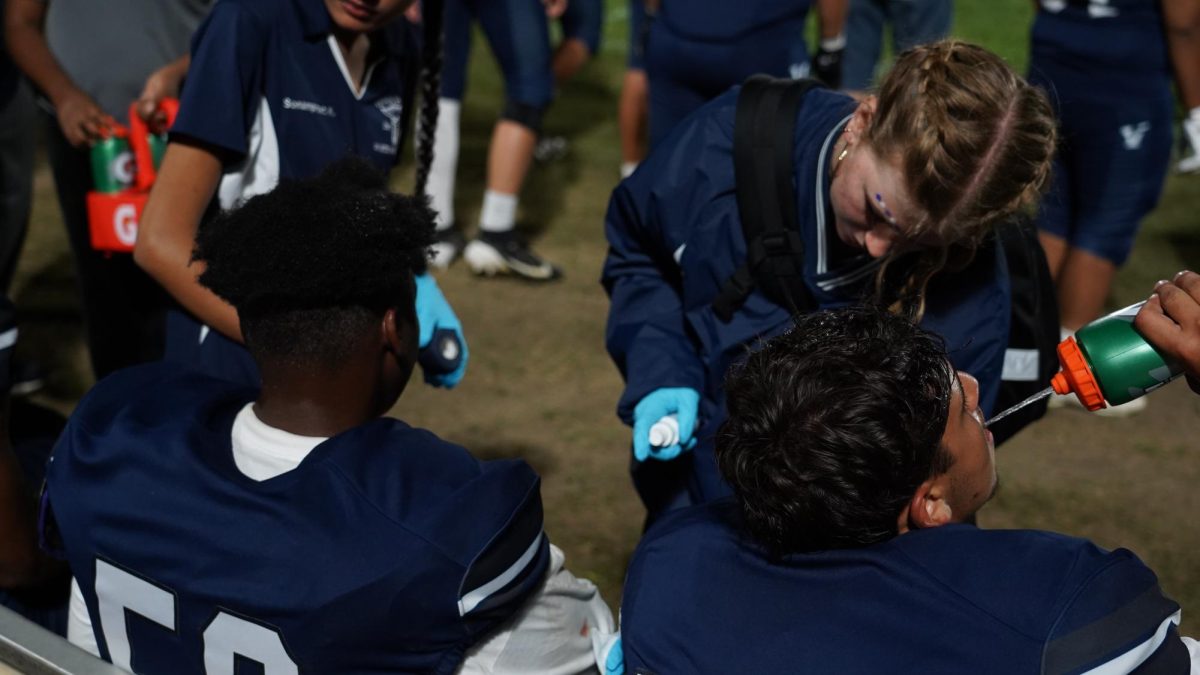
Additionally, sixth period coaches and teachers are working with athletic director Robin Hunt, assistant principals Richard Valerio and Ernesto Guerrero, and academic counselors to make their rosters more manageable. According to Asselin, in the past, some teachers have carried rosters of over 100 students for sports.
Recently, some students in sixth period sports have been switched to different sports and elective classes. Asselin told the Oarsman that they are working to ensure that students are placed in the class for the appropriate sport. He mentioned that the goal is also to make class sizes more equitable for teachers and students while complying with class size limits.
For the most part, teachers noted feeling satisfied with the class size shifts; Bare even expressed that her current class sizes are her ideal class sizes. The contract has seemingly produced a lot of improvement, and hopefully, that improvement can continue even after the current contract comes to a close.
Overall, Medina emphasized one thing about teachers and students navigating the complex challenges of larger class sizes: “We make it work.”