“[Trump] is doing a far superior version of [Veep], except that it’s not even remotely funny—it’s deadly serious.”
In an interview on February 12, 2020 for The Late Show with Stephen Colbert, actress Julia Louis-Dreyfus made the above remark when asked what it would be like to make a show like Veep—a 2012 absurdist comedy about fictional Vice President Selena Meyers (played by Louis-Dreyfus)—in 2020. Colbert later quipped that it would be like if Veep had the “tone of Chernobyl.”
Veep had started eight years before and wrapped less than a year before Louis-Dreyfus gave this interview, so to argue that a show which fictionalized a modern dysfunctional government already hit “too close to home” was no small feat. The lines between fiction and reality were obscured, she argued.
Whether you agree with Louis-Dreyfus or not, the world got a whole lot “stranger” when the COVID-19 pandemic drove most of the U.S. population into household isolation—a scenario in which we in modern society had barely considered, except in season one of the 1999 hit-drama series The West Wing created by Aaron Sorkin.
In the fifth episode, White House Deputy Chief of Staff Josh Lyman, played by Bradley Whitford, has an existential crisis after he is given a card granting him access to the presidential nuclear base in the event of an emergency, but not his colleagues. In a conversation with his friend and White House Press Secretary C.J. Cregg, played by Allison Janney, Lyman said that the most likely cause of the “end of the world” would be a global pandemic.
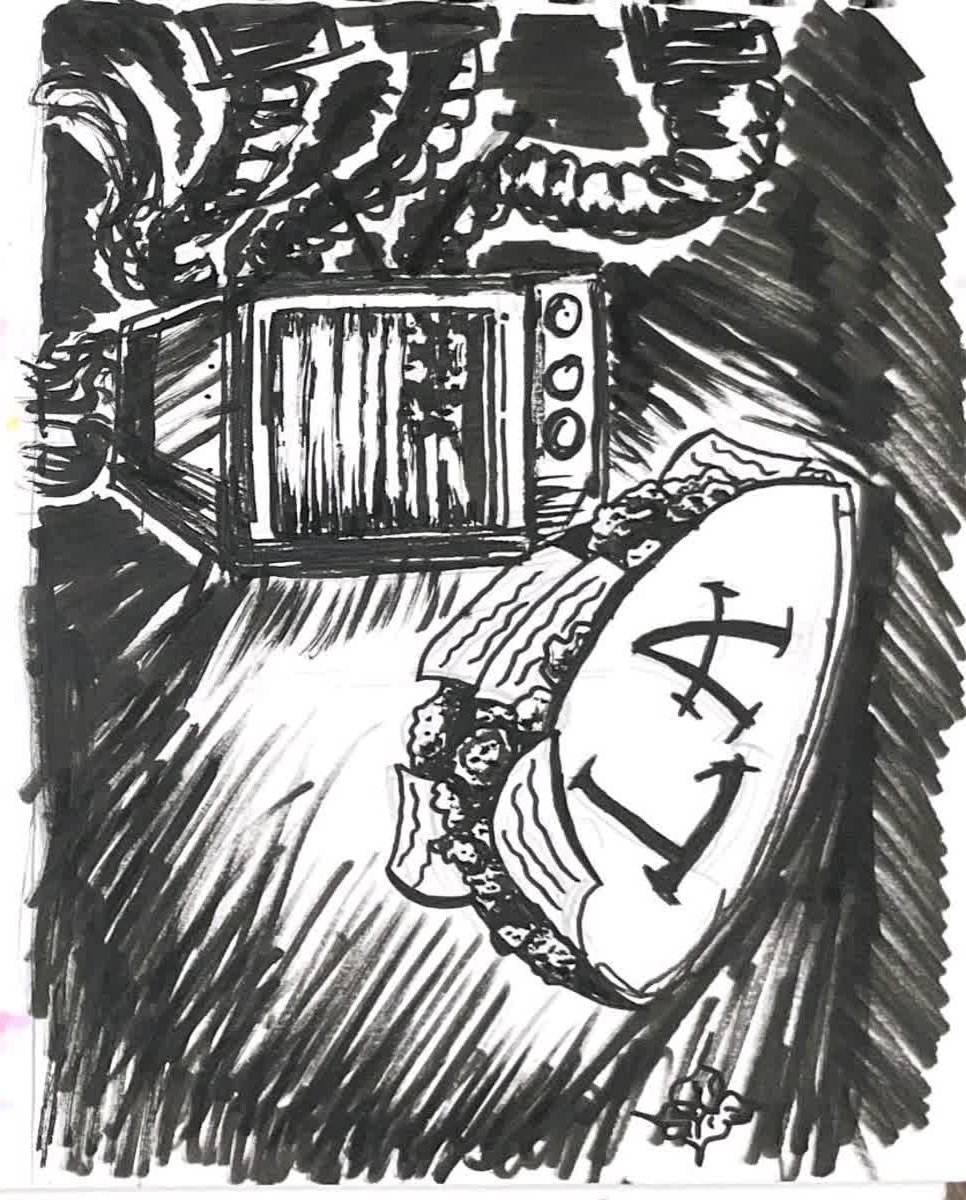
“It’s not going to be the red phone and nuclear bombs,” said Lyman. “[It’s going to be] a little test tube with a rubber cap that’s deteriorating.”
The West Wing, though widely considered by audiences as one of the greatest television shows of all time, is no stranger to criticisms surrounding its separation from reality.
Sometimes the complaints are that it romanticizes the world of politics to an extreme that is unattainable, and other times it is the opposite—that Sorkin is incapable of letting his characters “breathe” (in dialogue and in back-to-back story-lines), or that the show’s famous season finale plot twists are implausible or “far-fetched.”
But one of the most unique aspects of the show is that most of its plot-lines are modified versions of actual presidential history, with some added Sorkinian flair to make an engaging series.
The attempted assassination of President Josiah “Jed” Bartlet in the first season finale unsurprisingly resembles the 1981 assassination attempt of then-President Ronald Reagan as he exited the Washington Hilton Hotel.
In its second season, President Bartlet’s concealment of his relapsing-remitting multiple sclerosis echoed the way President John F. Kennedy hid his struggles with chronic back pain and his regular use of opiate pain killers. In fact, it was later revealed that Kennedy’s whole life is characterized by his struggles with his physical health, including digestive problems, urinary tract infections, Addison’s disease (deficiency in the adrenal glands), and several more.
Kennedy’s complex medical history is not unique to his presidency. Most Americans were unaware that President Franklin D. Roosevelt spent most of his time in a wheelchair, or that President Woodrow Wilson’s stroke in 1919 left him completely paralyzed and unable to fulfill the office of the presidency (leaving his wife, Edith Wilson, to secretly enact the duties of the nation’s chief executive.)
Additionally, The West Wing’s depiction of Bartlet similarly foreshadowed the Biden administration’s concealment of the mental acuteness of President Joe Biden, as discussed in the recent book Original Sin by Jake Tapper and Alex Thompson.
The West Wing’s most potentially unrealistic plotline is the finale of its fourth season. In the span of three episodes, the Vice President resigns, the President’s youngest daughter is kidnapped by a terrorist organization, and the Speaker of the House temporarily becomes the President of the United States, all tied up in the 40-minute Constitutional crisis of the century.
But we have provisions built into our Constitution because this almost did happen. The absence of the 25th Amendment during President John F. Kennedy’s assassination created the necessity for an official line of succession, meaning that its potential exercise one day is entirely plausible. The Vice Presidency has been vacant 18 times, including a one-year period after Lyndon B. Johnson ascended to the presidency after Kennedy’s assasination and in the case of Vice President Spiro T. Agnew.
When Agnew was forced to resign in 1973 after being indicted for accepting bribes as both governor of Maryland and as Vice President, and while President Nixon was being investigated for the infamous Watergate scandal, there was a 57-day period where the Speaker of the House becoming the president of the United States was no longer so far-fetched. Here too, truth is stranger than fiction.
Our realities are constantly redefined by the progression of time—but for many people in the modern era, the Cold War was that singular point in recent history where our “realities” surrounding global conflict were altered in unthinkable ways.
At the exact moment that the alliance between the U.S. and the Soviet Union broke apart, there was first a U.S. monopoly on nuclear weapons, and then a duopoly of weapons of unthinkable power. This momentous shift in the global balance of power meant that any war moving forward could not possibly play out the way any previous wars had done.
Before J. Robert Oppenheimer became “death, destroyer of worlds,” previous nations operated around the “unthinkable” fear that the wars they start could afflict their nations for hundreds of years. Now, wars are “unthinkable” because they might be over in thirty minutes.
The United States, out of necessity, created the tradition of having a cabinet member be absent for the president’s annual State of the Union address in Congress so that when “He shall, from time to time…,” the United States is prepared if Russia has a nuclear missile whirring straight towards the Capitol Building.
The September 11 terrorist attacks in 2001 seemed entirely unthinkable compared to any previous terrorist attack. The idea that you could level the two largest buildings in New York City by leveraging the simplicity of box-cutters was unimaginable.
Yet, the reality of that tragedy was so monumental that it could not even be represented in the world of The West Wing, and so a show based on real political history now lived in a pocket universe.
As we sit together in a cohort that has already survived a pandemic, we long for these fictional settings to relieve us from our tumultuous reality—ancient mysteries of the deep blue sea, contact with extra-terrestrials, extravagant jewelry heists from impenetrable fortresses.
But do those stories only exist in fantasy, or were they just last month’s headlines?
We have no idea what monsters lie in our oceans, our governments, and in the hearts and minds of our citizens, but what we do know is that if we can imagine our dream worlds, then we can shape our societies to someday create that reality for ourselves.
If truth is to remain stranger than fiction today, then maybe fiction can help us shape a better reality for tomorrow.