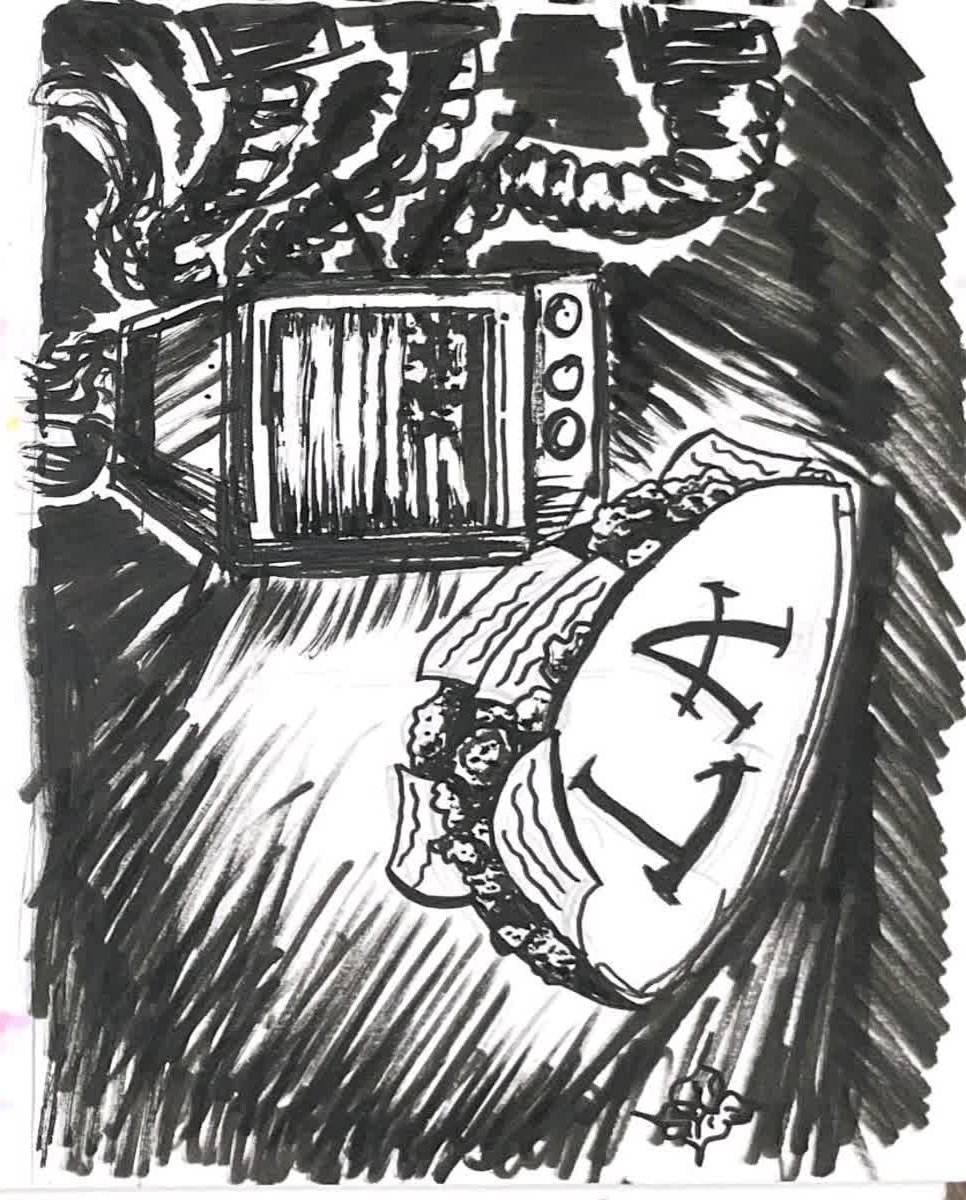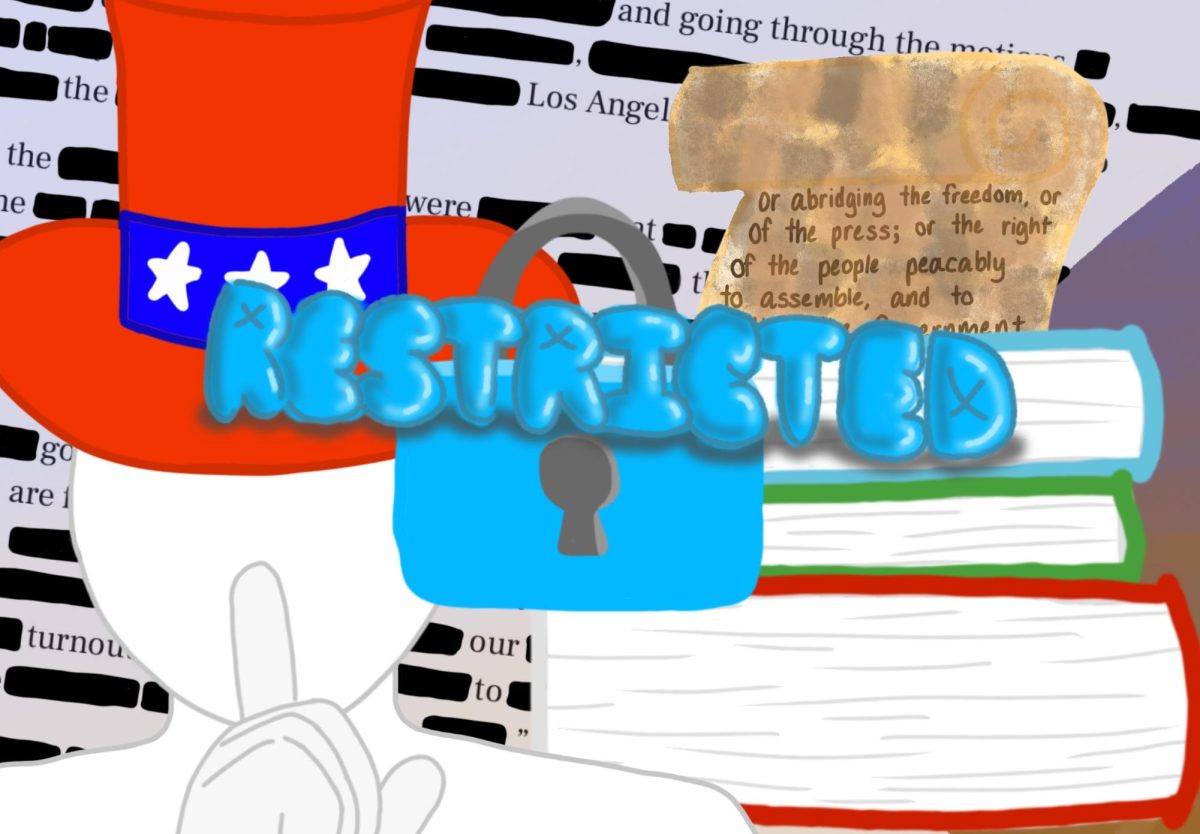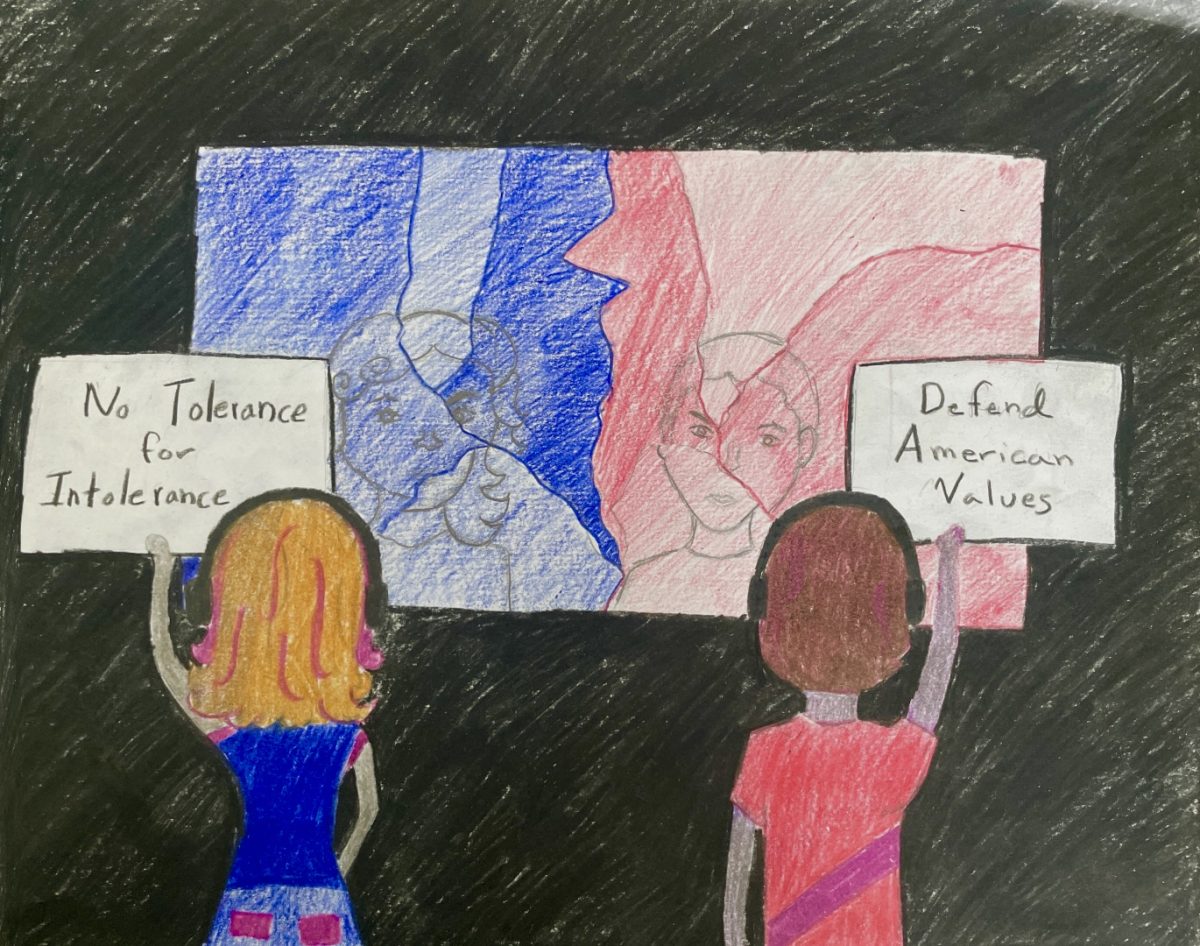
The quintessential American Childhood is idyllic. You are, of course, spoon-fed patriotism from the moment you open your mouth, but when you are seven years old, your world is one to be proud of.
This land is your land, and it is our land—from the redwood forests to the gulfstream waters, to the climbing trees outside of school, and the tire swing at the park. You recite the Pledge of Allegiance every morning.
Then I got older, and the star-spangled blindfold fell away.
On January 8th, in Minneapolis, Minnesota, ICE agent Jonathan Ross shot Renee Nicole Good. The last few months have been so constantly tumultuous that news rarely fazes me anymore (as horrifying as that is). Still, for myself and many others, this particular death was a shock.
As historian Robyn D. G Kelley phrased it, “She was a white woman and a mother—two things you’re not supposed to be when armed agents of the state put you in a body bag.”
The reported accounts of ICE detaining and deporting innocent people oppose the flimsy argument that they are acting in the name of national security and safety. The murder of a legal observer (an American citizen, a non-violent observer) exemplifies that point.
The officers surround her car, and she reverses, turning the wheel away. The camera turns to a bright blue sky as gunshots sound.
Alex Pretti was maced, restrained, and shot 2 weeks later, while observing an ICE raid on a local business. Pretti had been carrying a handgun (which he was licensed to own) at the time of his death, which remained holstered throughout the entire altercation (as bystander footage attests, despite federal statements).
The federal government defends the point that both Good and Pretti were killed in self-defense.
“You can get killed just for living in your American skin,” sings Bruce Springsteen on the 2001 single “American Skin (41 Shots)” released after the murder of Amadou Diallo at the hands of a group of NYC police officers. Diallo carried only a wallet, though the officers claimed they shot out of fear that Diallo was drawing a gun. One of them would go on to win Sergeant of the Year.
In 2020, George Floyd was murdered by Derek Chauvin (not a mile from where Renee Good would die 6 years later).
In the released bodycam footage, Floyd is detained for allegedly circulating counterfeit money. I can’t breathe, I can’t breathe. He is handcuffed and pulled through the backseat of the cop car. I can’t breathe. He falls to the ground, and Chauvin kneels against his neck. Floyd calls out for his mother. I can’t breathe I’m about to die. Please don’t kill me. After 8 minutes and 25 seconds, he is silent, unconscious.
The history of law enforcement using the argument of “self-defense” to justify the use of lethal force (particularly against black and brown individuals) runs deep within this nation. There are too many names to count. In 2025, 31 individuals died in ICE custody. The majority had resided in the United States for decades before their arrest. They died living in their American skin.
But in response to these horrors, the people are standing up and speaking out. From California to the New York islands, in high schools, and in signs posted in the windows of the shops that remained shuttered on January 30, you see the resolute American spirit.
This is what my mother refers to when she says she is proud to be an American; she is proud of the people and their resilience.
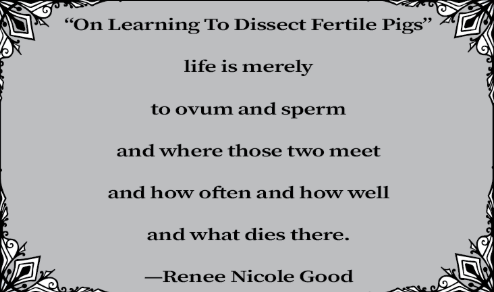
“On Learning to Dissect Fetal Pigs” is the only poem Renee Nicole Good ever wrote available online. I stumbled upon it while scrolling through news articles the day after her death.
There are times when it is impossible to separate the art from the artist and the context in which it was created. I do not know the context in which this poem was written, but I know the context in which I read it. There is something painfully ironic about the fact that this poem—about human life and our delicate origins—has only attained mainstream recognition because its creator is no longer with us.
Over the course of the last six weeks, this piece has evolved from a memorial to a poet I only discovered posthumously into an endeavored reflection on the corrosive presence of government-sanctioned violence in this nation (a history too insidious to cover here).
And still we attempt. We write, call, repost, protest, retweet. We continue these discussions, this dialogue. Though it seems futile, in a time where you can be killed just for living in your American skin, our individual voices standing together hold resounding power.
life is merely /
to ovum and sperm /
and where those two meet /
and how often and how well /
and what dies there.