LAUSD has crossed the line between safety and censorship.
The Los Angeles Unified School District is the second largest in the nation and they’re proud to be serving so many students. They claim to be working to get rid of inequality in education and to prepare all of their students for life post-primary and secondary education.
Their website says their vision is to “be the premier public school district by eliminating educational inequities to graduate ALL students ready for the world—to thrive in college, career, and life.”
I am 17 years old and graduation is imminent. In three months, I will turn 18 and be thrust into “the real world” that’s filled with responsibilities, struggle, and most relevantly: politics.
As much as some people believe that politics should stay out of the classroom, they can’t and they won’t.
They can’t because everything is political. In a world where basic human rights are seen as controversial and politics are everywhere we look—on the news, on social media, on the bus stop signs, in bathroom stalls, on front lawns—everything is inherently political, including education.
Politics won’t stay out of the classroom because for LAUSD to fulfill their duty of preparing students for the real world, they have to educate them on political issues and the government.
Even though politics will inevitably be embedded in curriculum, lesson plans, and the educational media that students see, LAUSD has decided to try to limit the content that students are viewing by restricting access to a multitude of websites and resources, including those that are political.
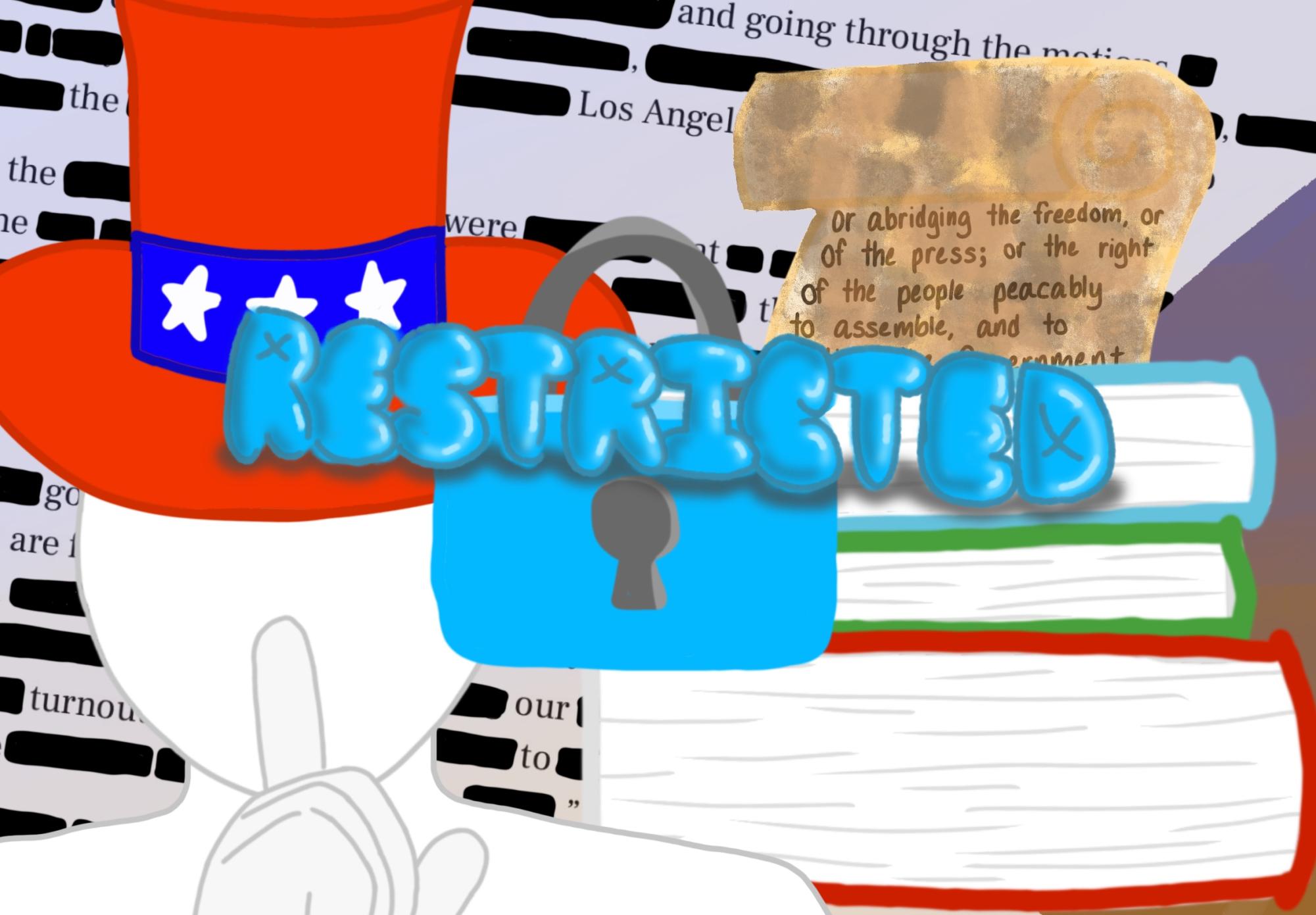
When I am in class and go to research any topic (on LAUSD’s browser of choice, Google Chrome) ranging from war to healthcare to democracy, I am met with the dreaded gray screen with a blue lock icon on it that tells me that the website I am trying to access is restricted by LAUSD and GoGuardian.
As a school district, LAUSD has a responsibility to keep their students safe. Ensuring that students cannot view content that is not age-appropriate is important, especially in our current era where through the internet, we have the whole world at our fingertips whenever we desire.
The problem is that in recent months, LAUSD has begun restricting more and more content and the line is blurring between safety and censorship.
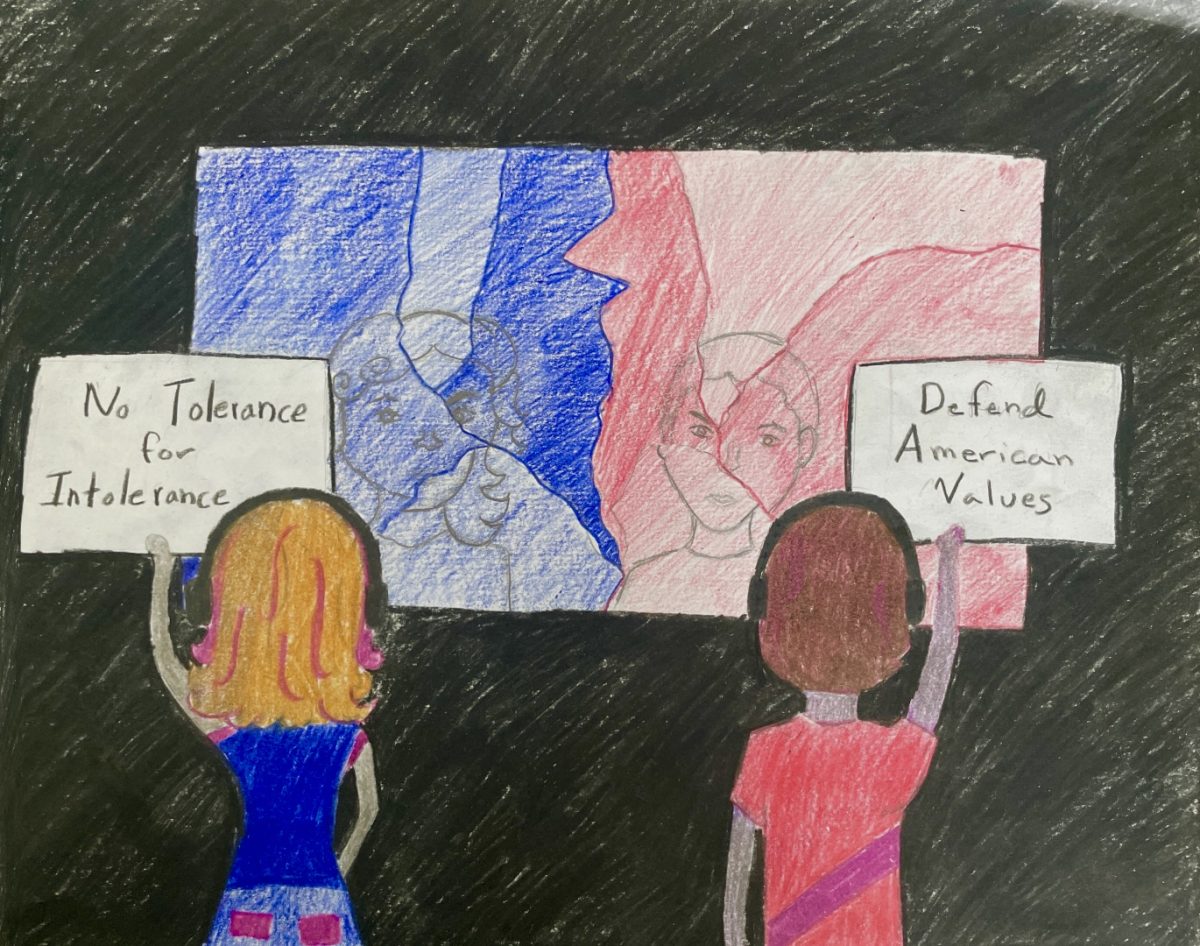
LAUSD has begun restricting many partisan political organizations, alongside some nonpartisan organizations. While the intention behind restricting partisan content may be to promote engagement with unbiased and more objective content, what it is actually doing is failing to provide students with multiple perspectives on issues and inadvertently promoting one way of thinking about issues.
Just a few months ago, I was researching information on LAUSD’s contract negotiations with United Teachers Los Angeles (UTLA) and was unable to complete my research on my district device because UTLA’s website was restricted.
For a labor union, UTLA is very politically active and often endorses political candidates whose goals align with the union’s and with progressive, liberal, or leftist ideals. Though this may seem biased and like a source that students should not be able to access, that point is undermined when considering that LAUSD’s updates on contract negotiations are accessible to students.
Though the updates are coming from the district themself, that does not make them unbiased. It actually makes them incredibly biased as the district is one of the parties involved in the negotiations and recount the happenings of the negotiations from their own perspective—making LAUSD look reasonable and patient and making UTLA look unreasonable and demanding.
Seeing LAUSD’s perspective on the labor negotiations is important because it is important to see multiple perspectives on an issue. That’s also why seeing UTLA’s perspective is important, yet students are being prohibited from doing so.
By trying to promote impartial information, the district is intrinsically promoting biased information that does not allow students to think critically about labor relations and form their own opinion on if and to what extent they are in support of UTLA and LAUSD.
Though LAUSD claims to be in support of students being civically engaged and exercising their right to vote, they have also restricted the websites of political candidates who are campaigning.
As of June 1, 2026—just one day before California’s primary election—the campaign websites for candidates like Faizah Malik and Traci Park, who are running for Los Angeles City Council District 11, are restricted. The websites of gubernatorial candidates including Tom Steyer, Xavier Becerra, and Chad Bianco are also restricted.
For the last two years, I’ve sat through at least one presentation where I have been taught how to register or preregister to vote and given the necessary form to do so. Just last week, I was given two of these presentations. Yet, if I were 18 and able to vote–which many of my classmates are–I would not be able to research the candidates who I would be expected to assess and vote for.
In September of 2025, LAUSD launched High School Voter Education Weeks to encourage students to vote for their Student Board Member, but also to help students with “building lifelong voting habits through opportunities to learn about voting, practice civic participation, and engage in democracy early.”
But not allowing your students to learn about the candidates who are running in the elections they are expected to vote in is not helping students practice civic participation responsibly. Engaging in democracy means understanding the candidates you are voting for and what they stand for. Building lifelong voting habits includes the habit of researching your candidates, not just the act of checking a box on a ballot.
Not allowing students to be exposed to multiple perspectives has multiple downsides that fail to prepare students for life beyond high school.
Students are given less opportunity to think critically about issues and form opinions that are true to their morals and ethics. In “the real world,” it is incredibly important to know how to research topics, view multiple perspectives, and assess information carefully and accurately. If you are only presented with one version of a story or issue, you are less likely to challenge that perspective, and that is how propaganda, authoritarianism, and fascism thrive.
Not allowing students to interact with opinions that may or may not be different from their own also unintentionally promotes intolerance. When people aren’t able to have civil discussions about political issues and speak calmly and respectfully with people who have different opinions than them, they will struggle to handle interpersonal connection and nuance in “the real world”.
In the classroom, teachers work to make sure the content in their curriculum is unbiased and objective. Teachers are instructed to refrain from engaging in political discussions with students to promote critical thinking and the allowance of students to form opinions autonomously—but the district doesn’t practice what they preach.
Even though teachers work to promote unity, a strong sense of community, and critical thinking skills, the district’s overbearing restriction on the content that students can access counteracts the efforts that educators make.
LAUSD needs to allow high school students to access political content if they hope to eradicate educational inequalities and set their students up to thrive and succeed in life.
Though the effort to protect students from inappropriate and alienating content is admirable, it can only do so much. Instead of trying to restrict every website that might not be suitable for students to view—which will never be foolproof—teach students how to assess what information is reliable and appropriate and what is safe for them to engage with.
In the wise words of protesters worldwide and my AP Government teacher, “We keep us safe.”