I’ve never been afraid of earthquakes.
Growing up in Southern California, you learn pretty quickly to sleep through them—or if it’s really serious, to get into a doorway, under a table, duck, cover, and hold. You run through drills in elementary school and laugh through tremors once you get older.
You hear a lot about “The Big One” growing up in California. How someday soon, the San Andreas fault will send a great, massive, 7.8 magnitude earthquake devastating across the state. Scientists say it’s at least a century overdue, but they can’t say when it’ll hit. Between tsunamis and fires and climate change, with so much pressure built up inside, it’s a wonder this place hasn’t imploded.
The Ridgecrest Earthquakes hit the summer I turned 11. I was at sleepaway summer camp. It was the day after the Fourth of July, and everything felt sunburnt and sleepy. It was hot, even well into the evening. It was after dinner. I was lying on the cold concrete floor, and someone was singing The Rembrandts. The chorus goes: I’ll be there for you, like you’re there for me too.
During an earthquake, you’re supposed to duck, cover, and hold. But in the empty room, there was nowhere to go.
That night, on the way back to our cabin, I felt aftershocks beneath my feet.
Over half of my group left the next morning, either scarred by the shaking or out of fear for their hometown. The rest of us went about our summer unfazed. That’s life on a fault line—at any point, everything you know could all disappear. But why worry? You have no control over it anyways.
In January, I watched the Palisades fires from the roof of my garage. From up there, I could see the smoke that blanketed Los Angeles. Orange tinged the sky and flickered in the distance. That month, it felt like the city was holding its breath.
When it at last had been extinguished, I drove up to the burn zone with my dad, where my uncle’s apartment was. It had been scorched, but still standing, unlike the rest of the block. Everything was still hazy. I walked all the way up to the house where we spent Christmas every year. All that was left was a few singed garden gnomes and the wrought-iron arch outside. Without the houses in the way, I could see the ocean from there.
I was very lucky compared to many of my friends and family members. In this catastrophe, all I lost were memories.
Growing up in California, you learn pretty quickly that you’re living on a precipice of disaster.
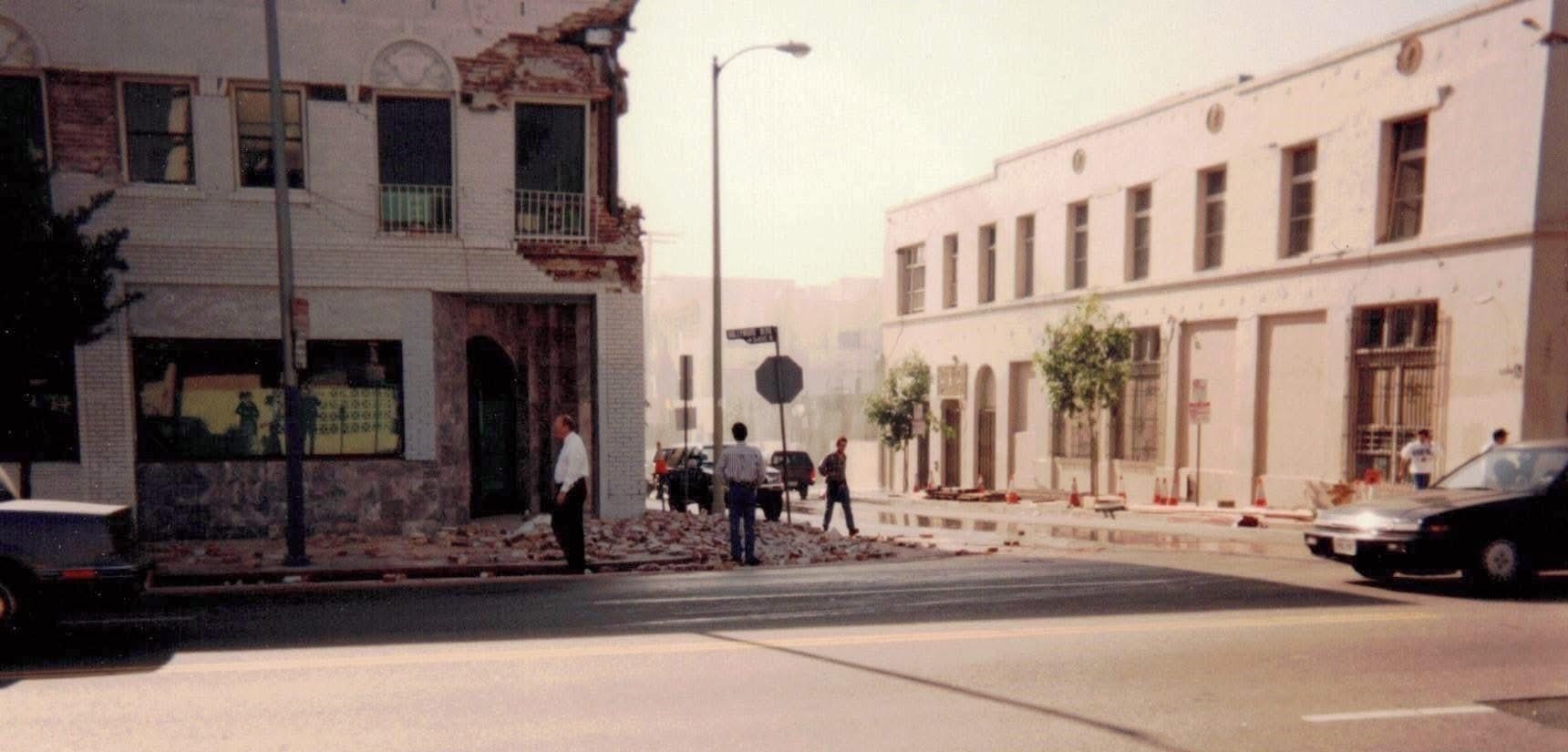
In 2018, when the Getty Fire rained ash down onto my elementary school, and before I was born, in Northridge in the 90s, when an earthquake killed 50 people and tore up the 5 freeway. And the earthquake way back in 1906, in San Francisco, when the city was destroyed in flames.
I really do love California. I could write a novel on this place, paint you a picture of the Redwood forest and the Pacific Ocean, of the oranges and avocados and the loquats, and the cold summers up north, desert days down south.
This gorgeous paradise, that might explode at any point.
There’s a Rilo Kiley song that goes, “California is a recipe for a black hole.” This little vortex of a state will turn everything to cells and string—spagettification, to use the scientific word. The gravity is stronger here. It’s impossible to escape.
Some people do, I suppose, but I think California will always call me back. There’s too much left unfinished here.
recipeforablackhole.blogspot.com hasn’t been updated since 2008. The last thing posted was a poem about a fisherman trying to mend his broken heart. The location in the author bio reads A Town Called Luckey, California. That’s another Rilo Kiley song.
Whenever I think about the inevitable disaster, I think about what will be left behind. The town of Ridgecrest, California, and the garden gnomes, and incomplete poems, and maybe the roller coaster at the Santa Monica Pier, its yellow frame floating among rubble in the ocean.
What will be spared when the Big One hits?
Bakersfield maybe. And the Inland Empire. It’ll become the coast. If California falls into the ocean, at least we can have beach parties in Riverside.