As a blind person, art is not something that I get to experience in the same way as other people. For me, art is more than just a view. Art is tactile, audible, almost living.
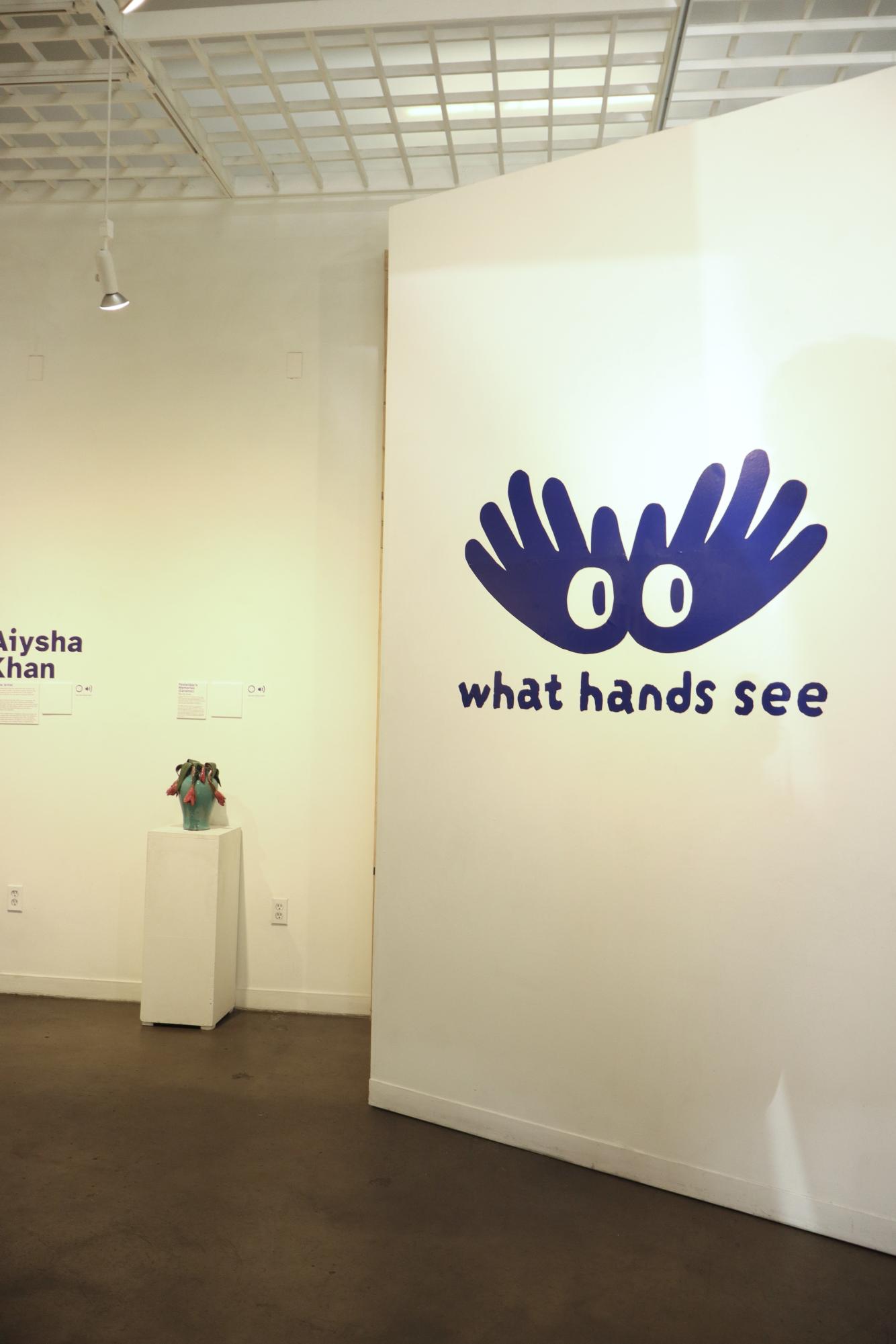
I visited an art exhibit called “What Hands See” in December that consisted solely of artwork made by blind and visually impaired artists.
What Hands See is a nonprofit organization run by USC students Cheyenne Kim and Chelina Kim that is dedicated to highlighting art by visually impaired artists and showing that art is more than just visual—it is a full body experience.
What Hands See hosted their first art exhibit at the E2ART Project Gallery in Downtown Los Angeles on December 20 and 21.
There are few things that I am willing to make the trek to Downtown L.A. for, but when I heard about “What Hands See,” I knew I needed to go.
The art pieces at the exhibition used various mediums including ceramics, mosaics, tactile paintings, and more.
Each art piece was accompanied by a description of the piece written in print, the same description in braille, and then an audio recording of that description that could be accessed through scanning an RFID tag with your phone.
There were also braille and print signs throughout the exhibit welcoming and encouraging viewers to touch the art pieces.
Being able to feel the art was a very special experience for me that made the exhibit more inclusive and helped me gain a clearer understanding of the art pieces.
Something that often makes art exhibits difficult and unenjoyable for me is the fact that I cannot get close enough to art pieces to see their details, but that wasn’t the case at this exhibit.
What Hands See partnered with the Braille Institute to find artists whose art should be put in the exhibit. Braille Institute is a nonprofit organization based in Southern California that provides free services for the blind and visually impaired, including art classes.
Co-founder Cheyenne Kim says that while working at Children’s Hospital Los Angeles, she often passes by the Braille Institute and that’s what sparked the idea for What Hands See.
“A lot of people don’t think blind or visually impaired individuals can create art because they can’t see,” she says. “I wanted to help people understand that even though you’re visually impaired, you can create art.”
For Cheyenne, the most meaningful part of the exhibit was getting to talk to visitors and help them understand that visually impaired people are capable of creating art.
“Visually impaired artists can really create beautiful artworks and being visually impaired isn’t something dysfunctional that they have to work with,” she says. “It’s something that’s a part of them, that they use to create art.”
For co-founder Chelina Kim, the most meaningful part was getting to speak to and interview the artists themselves.
“There’s only so much we can assume as people who are sighted,” she says. “Getting to hear their experience and what they put emphasis on directly from them was the most meaningful thing.”
Both Cheyenne and Chelina noted that though the process of creating art may be different for visually impaired artists, their art is still beautiful and complex in the same way that sighted artists’ art is.
“Even though they’re not able to completely see their artworks, they have a very deep sense and knowledge about the artwork that they make,” Cheyenne says.
Chelina spoke of one of her favorite pieces from the exhibit—“Ember the Dragon.”
”I think the piece itself is really cute and it also demonstrates how these artists tend to navigate the artistic process and how that looks different,” she says.
A key thing to understand is that though the process for blind and visually impaired artists is different, the art is not any less meaningful. “What Hands See” did a great job at illustrating that point and emphasizing the skill and talent that the featured artists had.
Cheyenne and Chelina said that they plan to host more exhibitions in the future and continue to highlight blind and visually impaired artists.
I am constantly inspired by what my community is doing. Seeing art by other blind and visually impaired artists makes art feel possible.
I am hopeful that someday blind and visually impaired artists’ art will live alongside sighted people’s art in galleries. I am hopeful that someday art can be seen in society as being for blind people too. I am hopeful that What Hands See can help these things happen.