During the very slow, drawn-out release of Stranger Things season five, the fandom split like the foundation of Hawkins at the end of season four. Essentially, everyone who ever watched the show was grouped into one of two categories: those in support of Mike Wheeler’s and Eleven’s long-established, almost codependent relationship, and “Byler” shippers—those who hoped to see romance spark between childhood friends Mike Wheeler and Will Byers.
In this piece, we broke down the differing views on “Byler”—the supporting perspective represented by Yvette Dinka and the opposition by Angela Villasana—and the development of queer identity arcs in Stranger Things.
In Support of “Byler”
For many “Byler” fans, Mike’s actions were confusing and sent mixed signals. However, we have much of that to blame on Matt and Ross Duffer, the brothers who created the five-season show.
So, bear with me as we break down the complicated character of Michael Wheeler and how he contributed to the hope—and later betrayal—of the “Byler” community.
In Season One, Will goes missing, and no one is as devastated as Mike. Will’s his best friend, so that makes total sense. However, there were certain quotes that hinted towards Mike’s feelings being more than platonic.
About halfway into the second episode of the first season, Karen Wheeler, Mike’s mom, talked with him about Will’s disappearance and alleged death.
“All this that’s been going on with Will, I can’t imagine what it’s been like for you,” Karen said. “I just…I want you to feel like you can talk to me. I never want you to feel like you have to hide anything from me.”
Another quote from season one in episode seven seems too ironic to be unintentional.
As Dr. Brenner and his team searched the Wheelers’ house and questioned Karen and Ted about Mike’s possible involvement with El, Ted quipped: “Our son with a girl?”
That comment may not seem like a lot, but it sure would be to a community of fans of a show with directors that claim to do everything intentionally.
Based on this information—and trust me, there are many more scenes I could dig up—it makes sense that many people think Mike Wheeler is depicted as a character who’s…not straight.
The Duffer Brothers also reflected the deeper meaning of scenes through songs and set design.
In season four, during the fight between Will and Mike at Rink-O-Mania, the song that plays is called “In The Closet (at Rink-O-Mania)” by Kyle Dixon and Michael Stein.
Also depicted during season four is a scene where Mike is hurriedly getting ready for school, the camera panning to one side of his room. On his wall is a “One Way” street sign…pointing to his closet.
Whether or not this design choice was intentional, it makes perfect sense why many fans would take it and run with it.
To quote Lucas in season five: “I don’t believe in coincidences.”
Friendship Over Romance
Mike’s affection towards Will is real—but it is the affection of a close friendship, which is unfortunately less normalized in male friendships.
Platonic love is not less valuable than romantic love. Whether it’s the mentor-like relationship between Dustin and Steve or the once one-sided romance turned friendship between Steve and Robin, some of the best relationships in the show are platonic. Materializing an underdeveloped romance between Will and Mike would have gathered further criticism and been an injustice to Will’s journey of self-acceptance.
Learning to accept rejection is part of learning to be comfortable with yourself. By keeping Will and Mike friends, the message that self-acceptance doesn’t derive from external approval is strengthened.
At the center of the show is the importance of friendship. The show began and ended with a group of friends playing D&D in a basement. Maintaining that friendship between Will and Mike kept this message at the forefront while allowing Will a future of exploration and self-acceptance.
The show has faced queerbaiting allegations, implying that the directors hinted at romantic potential to generate engagement and draw an LGBTQ+ audience. But considering the show’s wide appeal and interview statements given by the cast members hinting that “Byler” was not happening, I think this is unlikely.
It is understandable that fans wanted to see Will get his “happy ending,” but hanging on to any clue of love or interest doesn’t make “Byler” realistic. Choosing to focus on an arc of self-acceptance, rather than external validation and the fulfillment of teenage love, was the way to go, but the execution fell short of its potential.
Comparison Of Coming Out Scenes
Robin’s coming out scene in season three was a masterclass on creating a heartfelt and intimate moment, which is why Will’s coming out scene was comparatively disappointing.
On the floor of a mall’s bathroom stall after surviving a near-death experience, Steve confesses his feelings for Robin. That’s when she tells him about Tammy, the girl she had a crush on.
“She wouldn’t stop staring at you…Tammy Thompson,” Robin says to Steve. “I wanted her to look at me, but she couldn’t pull her eyes away from you and your stupid hair.”
There was an unspoken understanding and moment of acceptance in a physically and emotionally intimate environment, ultimately strengthening Steve and Robin’s friendship.
In comparison, Will’s coming out was awkwardly placed and underdeveloped as a journey of self-acceptance, its significance falling short of its desired effect.
In season five, we see Will finally tap into his powers after hearing Robin’s speech, hinting that he could harness Vecna’s powers because he was beginning to accept himself.
A great start to his journey of self-acceptance was followed by a mildly disappointing coming out scene where Will minimizes his love for Mike to him being his “Tammy”.
Will addresses a room full of his family, friends, and people he barely knows. He says Vecna showed him a vision in which everyone hates him after finding out the truth, and he is aware that Vecna will use this fear against him.
Attributing his desire to come out to an off-screen vision makes the scene feel detached from the plot and contradictory to his arc of self-acceptance. While attempting to champion friendship and embracing authenticity in the scene, Will’s actions appear to be more driven by fear than self-acceptance, and attempts at grandiosity diminish its authenticity.
Set in a small midwestern Indiana town in the eighties, coming out would have been a bold move that realistically would have happened between trusted friends and family only, if at all.
The scene garnered criticism for both being too drawn out and not doing enough. Ultimately, being awkwardly placed in between intense rescue plans, the length and public nature of the scene made the scene feel forced rather than a necessary, natural progression of the story.
The Duffer Brothers also avoided addressing the complexity of Mike and Will’s relationship by minimizing Will’s love for Mike to just another crush, like Robin’s “Tammy”.
It’s understandable that Will would be getting over Mike, but it’s unrealistic that everything would just click into place after he takes out three demogorgons. Will calling Mike his “Tammy” seemed like a cop-out. It’s possible to accept yourself without invalidating your feelings for someone.
And, instead of a heart-to-heart between friends, we get a minute-long conversation.
“I just…I think it needed to happen the way it happened,” Will said to Mike. “I needed to find my own way.”
They end off their conversation with the infamous, “Friends? No thanks. Best friends,” from Mike, arguably a dig from the writers at the possibility of a relationship between the two.
This lack of meaningful closure also appears in Robin and Vickie’s relationship, the only queer relationship in the show. Their relationship was mostly developed off-screen and left with a loose end when Vickie disappeared in the epilogue. The Duffer Brothers told Entertainment Weekly that they left their ending “intentionally vague” for the fans to interpret.
With Robin having become a fan-favorite since her introduction in season three, the lack of clarity around her relationship was disappointing, especially when every other relationship in the show got their moment or closure at the end—Mike and Eleven, Lucas and Max, Joyce and Hopper, and Nancy and Jonathan.
Robin’s relationship and Will’s acceptance arc were both great ideas that weren’t executed the way many people hoped they would be.
Will’s role as an outcast and his perseverance through many struggles—which range from surviving the Upside Down and battling PTSD to his complicated family life and eventual journey of self-acceptance—allowed people to see themselves in his character and find hope in his story.
The queer identity arcs in Stranger Things held great potential to champion the value of self-acceptance, but with under-developed storylines and awkwardly placed scenes, the intention fell short.
Ultimately, the Duffers should have leaned more heavily on Robin’s guidance.
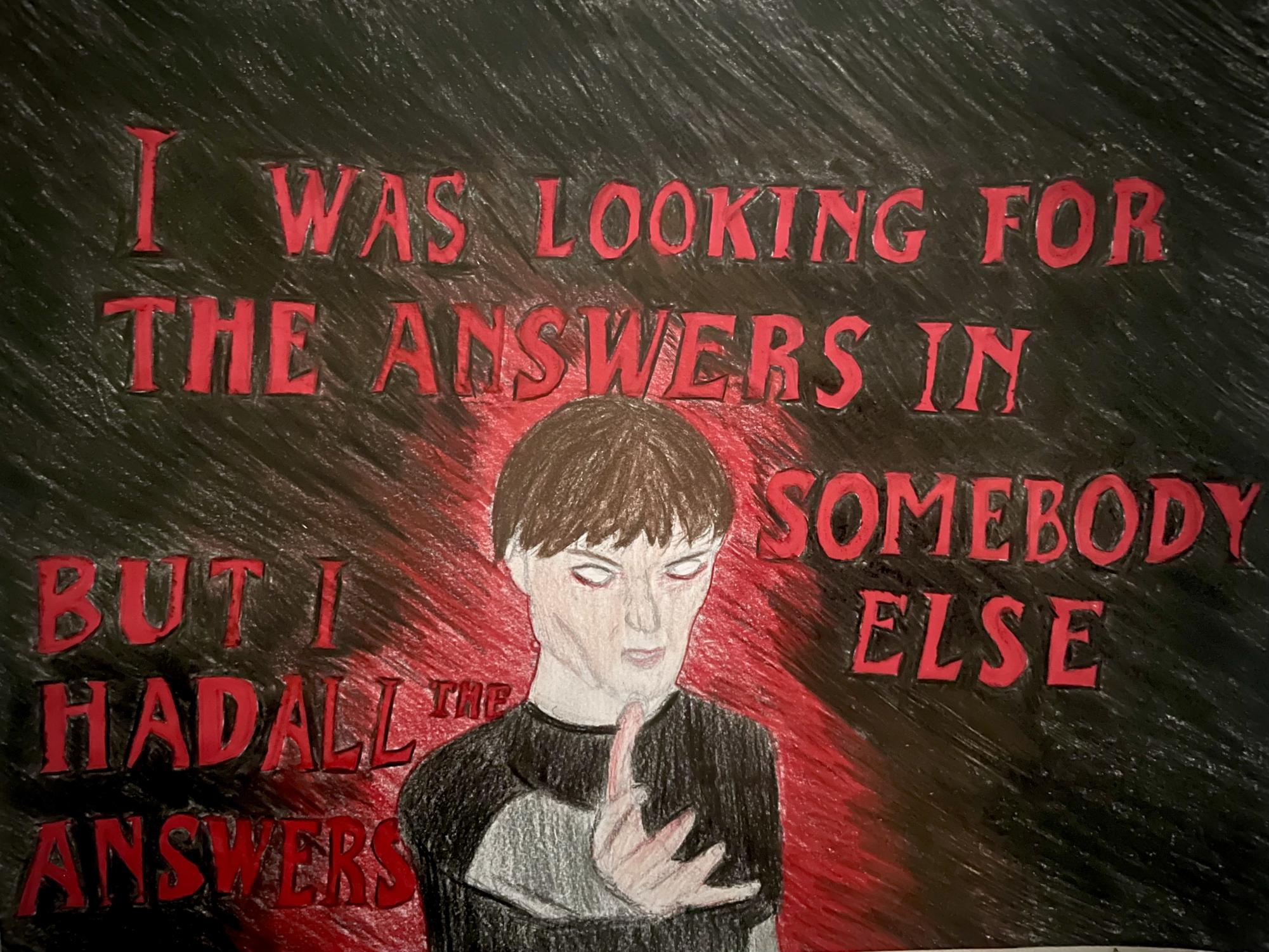
“I was looking for answers in somebody else,” she said. “ But…I had all the answers.”
The Duffer brothers had all the puzzle pieces to craft a powerful message of self-exploration and acceptance…they just never finished the puzzle.